NFE (New Faculty Experience) is a three-year development experience that helps newly hired technical college faculty grow and develop their teaching and learning skills in an engaging and supportive environment.
How do you plan to stay up to date after NFE?
Continue to be a lifelong learner yourself. As your students, your fields, and the world change, you’ll need to change with them. Make it intentional, and build time into your weekly schedule to keep learning, growing, and sharing.
Listen

“I do follow organizations on social media, subscribe to newsletters, and have discussions with coworkers. I think the times I learn the most is just having conversations with my students about who they read, who they watch and who they follow on social media. Our language is always changing and sometimes the students are on the cusp of those changes. Plus, then they can explain it to me!”
—Stacy Mitchell, Instructor – Communication Skills
- Trust your instincts, but challenge them, too.
(“Students really need to know this” vs. “I just really love teaching this.”) - Employers and Industry
Follow job postings, advisory committees, workplace visits, and labor statistics. AI can help research trends, but always verify with source URLs. - Other Instructors and Students
Students already working in the field. Ask questions, share ideas, and learn how others do things. - Build Your Own Professional Network
Follow industry leaders, join professional organizations, and participate in online communities, conferences, and workshops. - Stay Connected
You don’t have to figure everything out on your own.

“I have really enjoyed partnering with the La Crosse Chamber of Commerce to host biannual Speaker Series events for our students. These events allow students to hear directly from local business and industry leaders about their experiences and perspectives, complementing classroom learning with current, real-world examples and insights. I learn something new from each event and appreciate the willingness of local professionals to share their knowledge and expertise with our students. In addition, the events have helped strengthen the connection between Western and the local business community, providing employers with an opportunity to learn more about our program and, in some cases, join our advisory committee.”
—Jamie Hammond, Business Analyst Instructor

“The best way I’ve found to stay current in photography and video production is to continue being part of it. I still maintain a few commercial clients. It keeps my skills sharp, challenges me to adapt to new technologies, and ensures that what I bring into the classroom reflects what’s actually happening in the field.”
—Michael Lieurance, Digital Media Production Instructor
Refine
- Use Student Feedback
Mid-session evaluations can give you practical ideas you can implement right away. Ask what’s working, what could improve, and invite additional comments. - Look for the Middle Ground
Don’t let one or two strong opinions steer your decisions. Pay attention to the feedback that seems meaningful and comes up repeatedly. Try changing 1–3 things each year. - Explore What Works for You
Read about UDL, teaching strategies, and learning research. Borrow ideas from other instructors and adapt them to your classroom. - Learn From Others
Ask fellow teachers, faculty coaches, students, and industry professionals for feedback, ideas, or simply a listening ear. - Take Time to Reflect
What’s working? What’s not? What would you like to try or improve next?

“Working with community partners as clients for my students’ media projects kept me current in ways a textbook never could. It reminded me that to stay relevant, I had to maintain my professional network and keep my own skills sharp enough to support their missions. That meant updating the tools and techniques I brought into the classroom, so students were learning today’s technology, not the tape-to-tape editing I started with. Seeing the students grow through that work was the best reward.”
—James Bushman, Associate Dean of Business & Digital Media Production Instructor
Stay Relevant
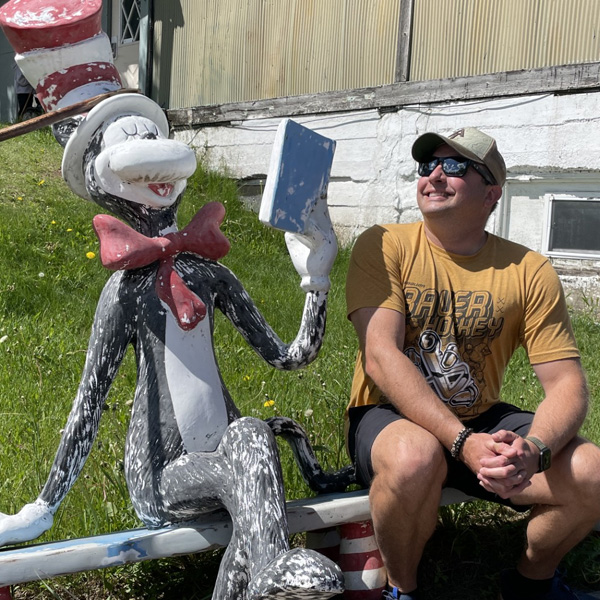
“I personally have made a habit to seek opportunities within the organization. It is not formal education; it is more organic through personal relationships. To make this tangible, I like framing this in a tactic I learned in the military, it is the 1/3 Rule. It goes like this: 1/3 of your time is spent with people who you get to share your knowledge with, another 1/3 of your time is where you get to share similar experiences (insert your teacher besties), and the remaining 1/3 of your time you get to spend with people you want to learn from. It all equates to balance and appreciation of how I get to spend my time and how I use it.
—David Lein, Landscape Horticulture Instructor
- Keep Learning
Explore new methods, software, techniques, platforms, and industry changes—even the things that seem odd or irrelevant at first. - Make Time For It
Set aside dedicated learning time during summer or off-teaching terms. Even two hours a day, five days a week, can make a real difference. - Stay Connected to the Work
Take on a real-world project in your field each year. Volunteer work counts, too, and gives you fresh experiences to share with students. - Keep your Advisory Committee and Network Involved
Ask for feedback on coursework and classroom activities, and run new ideas by them before bringing them to Deans or colleagues. (But don’t overload them)

“My wife and I run a small publishing business where we do all our own graphic design, illustration, web design, and marketing. So I am able to keep up to date with these industries so we can remain competitive. I also talk to designers, graduates, and our advisory committee to keep up to date through their experiences.”
—Craig Kunce, Graphic Design Instructor
Backward Design from . . .
It’s helpful to backward design your learning activities by listening to
- Your own and NFE experiences and knowledge
- Teaching and learning strategies that are tried and trusted
- What has been working with students
- Program learning outcomes
- Job postings for your field (and a little beyond)
- College learning outcomes and soft skills (Successabilities)
Program Learning Outcomes are best built from
- Job postings and employer needs.
- Advisory committee guidance.
- Your experiences as a professional (what you feel they need to know to be valuable and competitive in their careers).
New Habits, Not Requirements
These aren’t additional things you have to squeeze into your already busy schedules. They’re small habits and ways of thinking that can help you stay curious, connected, and engaged throughout your career.
- Stay curious. Explore something outside your immediate discipline. Try an unfamiliar tool, attend a workshop, or learn something simply because it interests you.
- Experiment. Try new approaches in your classroom. Not everything will work, and that’s okay. Sometimes the things that don’t work teach us the most.
- Keep a running list. Jot down interesting ideas, useful resources, industry changes, and things you’d like to try in your classroom. Nothing fancy.
- Share what you learn. Talk with colleagues about new discoveries, successful activities, and even things that didn’t go as planned.
- Give yourself permission to change your mind. What worked five years ago might not work today. What you believe students need might change as the industry changes.
Share something that resonated with you today
- Maybe you heard an idea you want to try
- Maybe something challenged an assumption
- Maybe a colleague’s quote stuck with you
- Maybe you were reminded of something you’ve been meaning to do or try