
Be patient with yourself when requesting information from AI—it’s imperfect.
AI prompting is always evolving, and each AI model and/or subscription level responds differently to your prompts. AI can help you be more efficient and productive, but it will also take some effort on your part.
At a minimum: Give yourself basic AI literacy skills. You will want to have them, and employers want them. They will add to your value as an employee and team member.
Example Prompt with Resulting Image
Create a realistic 16:9 horizontal image of five racially, age, and body-type diverse college students collaborating around a computer in a modern classroom. They are researching career opportunities in business. Include charts and business graphics on the walls. Use bright natural lighting and a professional, optimistic mood. Keep the image suitable for a college website.

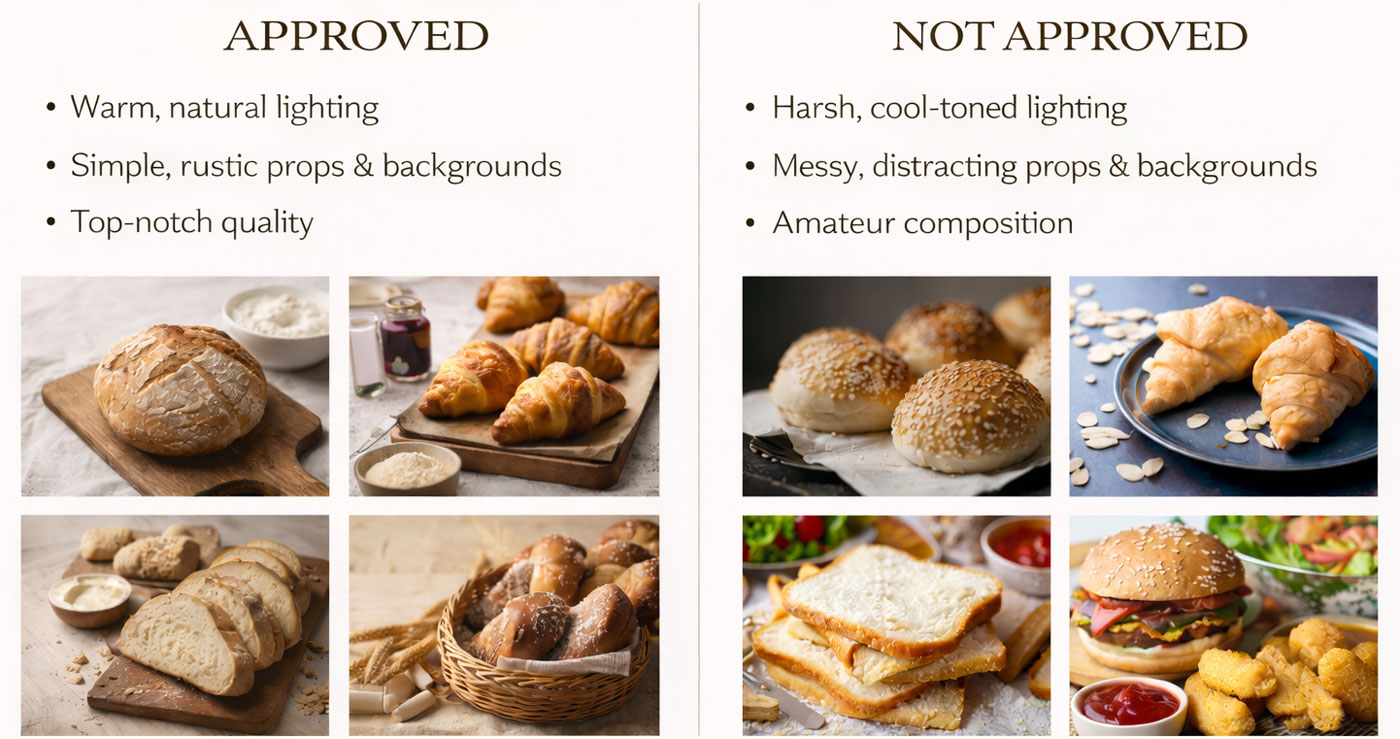
Use constraints in your prompt for better results
An Important Reminder
Treat AI like a new employee, not a mind reader.
The clearer your instructions, context, and expectations, the better the results will be. AI performs best when you provide enough information for it to understand your goal, audience, and desired outcome.
AI Prompting Best Practices for Images
Describe the Main Subject
- Clearly explain what should appear in the image.
- Be specific about people, objects, and activities.
Define the Purpose
- Explain how the image will be used.
- Examples: website banner, poster, social media graphic, infographic, advertisement.
Specify Composition
- Describe camera angle, layout, orientation, and focus.
- Examples: close-up, wide shot, centered composition, 16:9 horizontal.
Describe the Style
- Explain the visual style you want.
- Examples: realistic photography, vector illustration, flat design, watercolor, 3D render.
Include Audience Details
- Consider who will view the image.
- Mention age groups, industries, or target customers when relevant.
Define Colors and Mood
- Describe the overall feeling and color palette.
- Examples: professional, energetic, playful, luxurious, futuristic.
Include Diversity When Appropriate
- If people are shown, specify representation needs.
- Example: a racially, age-, and body-type-diverse group of students.
Mention Important Details
- Include text, branding elements, clothing, environment, props, or other key features.
Iterate and Refine
- Small prompt adjustments can dramatically improve results.
- Don’t hesitate to request revisions.
AI Prompting Best Practices for Text
Be Specific
- Clearly explain what you want AI to create.
- Include the purpose, audience, and desired outcome.
Provide Context
- Give background information AI needs to understand the situation.
- More relevant context usually leads to better results.
Define the Audience
- Tell AI who the content is for.
- Example: college students, business professionals, parents, or customers.
Specify the Tone
- Describe how the content should sound.
- Examples: professional, friendly, persuasive, casual, energetic.
Include Constraints
- State any requirements such as length, format, reading level, or key points to include.
Ask for Structure
- Request specific formats such as bullet points, paragraphs, emails, social posts, or reports.
Refine Through Conversation
- Don’t expect perfection on the first try.
- Ask AI to revise, expand, simplify, shorten, or improve the output.
Verify Important Information
- Fact-check statistics, sources, dates, and claims before using them.
Example Prompt
Write a 150-word social media post promoting a new organic coffee shop. The audience is busy professionals ages 25–45. Use a friendly and energetic tone, and include a call to action.
AI Prompting Best Practices for Research & Analysis
Define the Research Goal
- Clearly explain what you want to learn.
- Be specific about the question AI should answer.
Provide Context
- Explain why you’re researching the topic.
- Include industry, audience, location, or timeframe when relevant.
Narrow the Scope
- Broad questions produce broad answers.
- Focus on a specific industry, career field, trend, or problem.
Request Current Information
- Ask for recent or up-to-date information when researching evolving topics.
- Example: “Use information from 2025–2026 whenever possible.”
Ask for Multiple Sources
- Request information from several reputable sources rather than relying on a single source.
- Look for patterns and consensus across sources.
Request Citations and References
- Ask AI to provide links, citations, or source information for major claims.
- Verify important sources before using them in academic or professional work.
Ask for Data, Not Just Opinions
- Request statistics, trends, hiring data, surveys, or market reports when available.
Ask for Comparisons
- Have AI compare industries, career paths, technologies, or future trends.
- Comparisons often reveal insights that individual summaries miss.
Ask AI to Identify Limitations
- Good research includes uncertainty.
- Request areas where experts disagree or where future outcomes are difficult to predict.
Request Actionable Conclusions
- Ask AI to summarize practical takeaways and recommendations.
- Focus on what the information means, not just what it says.
Verify High-Stakes Information
- Always double-check information related to careers, finance, law, healthcare, or major business decisions.
Example Research Prompt
Research the future job market for graphic designers from 2026–2035. Use recent industry reports, employer surveys, and job market data. Identify the top skills employers are seeking, how AI is affecting the profession, and which design specialties are expected to grow or decline. Include citations and links to sources for major claims. Conclude with practical recommendations for current college students preparing to enter the field.
Example Research Prompt for Business Students
Research the most in-demand skills appearing in business and marketing job postings in 2026. Analyze employer expectations, hiring trends, and workforce reports. Identify both technical skills and soft skills. Include statistics and citations whenever possible, summarize areas of agreement among sources, and provide recommendations for students entering the workforce.
Example Research Prompt for Comparing Career Paths
Compare careers in digital marketing, sales, human resources, and business analytics. Analyze salary ranges, projected job growth, required skills, AI’s potential impact on each field, and long-term career opportunities. Cite sources and summarize which skills appear most valuable across all four careers.
Remember
Use AI to gather and organize information, but use your own judgment to evaluate the quality, credibility, and relevance of the findings.
Good researchers don’t simply accept answers—they verify sources, compare perspectives, identify biases, and draw conclusions based on evidence. AI can dramatically speed up the research process, but critical thinking remains a human responsibility.