
Here is how my course, Web Design for Small Business, implements six leading teaching and learning strategies.
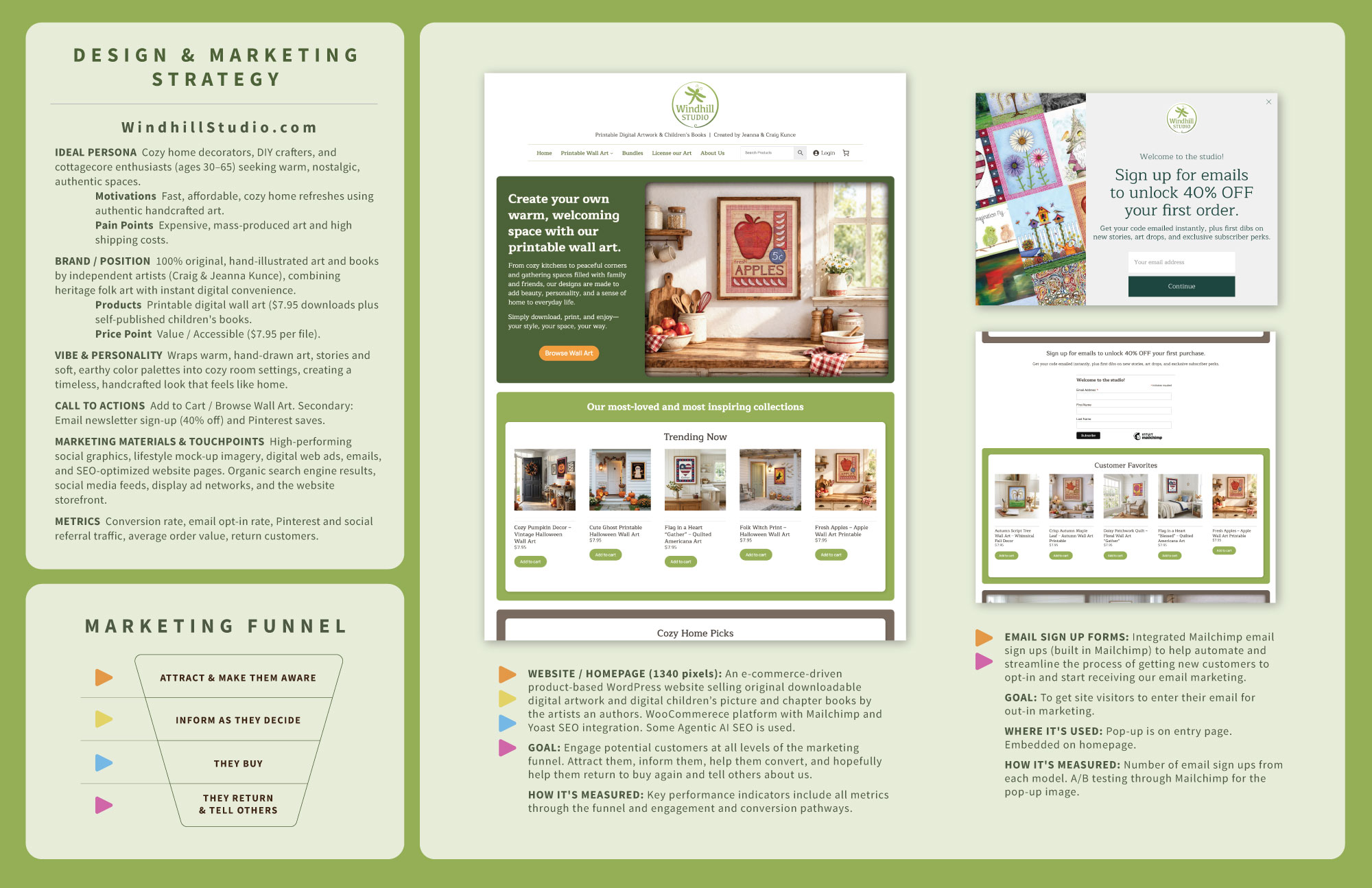
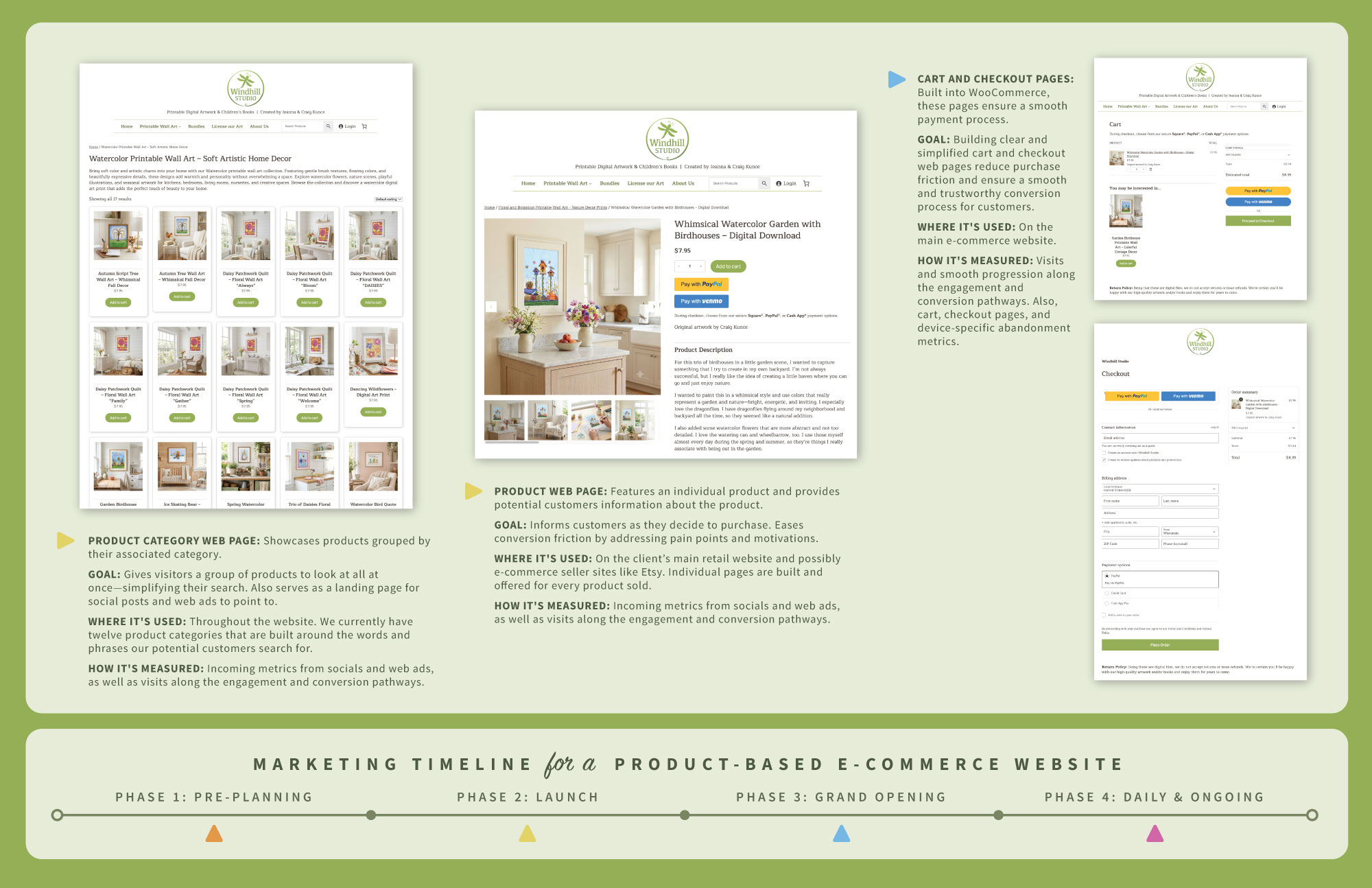
The design project students create:
1. Don’t Overload Their Brains
(Cognitive Load Theory)
Break big skills into small steps and pair clear visuals with simple instructions so beginners don’t get overwhelmed.
What it means for teachers
- Beginners can hold only a few new things in their heads at a time.
- Pairing simple text with clear visuals helps students learn faster.
- Showing a finished example before they start removes confusion.
How it is used in the Web Design for Small Business Marketing Campaign Project
- Step-by-step chunking: The course breaks e-commerce website building into manageable weekly milestones—starting with WordPress subfolder installs and theme setup, moving into WooCommerce product creation, and finishing with SEO and conversion optimization.
- Visual + text pairing: Every instruction page includes clear step-by-step guidelines alongside real website and dashboard examples.
- Worked examples: Students see a complete sample e-commerce site (such as the Windhill Studio website example) and past student work before building their own online stores.
- Beginner-friendly tools: Students use clean, block-based workflows (like WordPress Full Site Editing and WooCommerce) rather than getting bogged down by complicated custom coding right away.
2. I Do, We Do, You Do
(Cognitive Apprenticeship)
- Demonstrate how a pro does the work first (I do)
- Give students starter templates while they practice (we do)
- Slowly step back as their skills grow (you do).
What it means for teachers
- Students learn hands-on skills best when they watch an expert do the work first and hear why choices are made.
- Teachers give starter supports early on, then slowly step back as students gain skill.
How it is used in the Web Design for Small Business Marketing Campaign Project
- “I do” (Modeling): The instructor demonstrates how to install WordPress, configure WooCommerce, and optimize pages for SEO in class, providing clear walkthroughs.
- “We do” (Scaffolding): Students practice building and configuring their e-commerce sites using guided exercises, starter themes, and structured tutorials.
- “You do” (Fading): Once students understand the fundamentals of WordPress and e-commerce structure, they independently plan, build, and launch their own unique Windhill Studio-style small business website.
3. Make It Real
(Andragogy & Applied Adult Learning)
Connect every lesson to real jobs and practical problems so career-focused students immediately see why the work matters.
What it means for teachers
- Career-focused students try harder when they know why an assignment matters for a real job.
- They learn best by solving real-world problems instead of doing abstract busywork.
How it is used in the Web Design for Small Business Marketing Campaign Project
- Real job tasks: Students act like working web designers and small-business consultants—building a functioning e-commerce store, adding physical or digital products, setting up Yoast SEO, and connecting Google Site Kit and Analytics.
- Job market proof: Course materials connect web design and e-commerce directly to what small businesses, freelance clients, and marketing agencies look for in web professionals.
- Portfolio-ready output (Client-Ready): Every live, functional website built during the course serves as a professional portfolio piece that students can show during job interviews.
4. Give Choice and Early Wins
(Self-Determination Theory)
Keep students motivated by giving them choices in their projects and setting up small, early successes that build their confidence.
What it means for teachers
- Students stay motivated when they have some control over their work.
- Early small successes build confidence and reduce fear of failure.
- Clear grading levels help students see how to improve.
- Giving feedback that focuses on clear solutions and next steps keeps students motivated to improve instead of feeling stuck.
How it is used in the Web Design for Small Business Marketing Campaign Project
- Student choice: Students choose their own small business client or niche store concept and decide what products or digital goods to sell in their e-commerce store.
- Early wins: Successfully publishing a clean homepage and uploading their first functional product early in the semester gives beginners an immediate confidence boost.
- Clear targets: The grading guidelines show students the difference between basic setup and a fully optimized, “client-ready” e-commerce site so they know what to aim for.
- Actionable feedback: Solution-focused progress critiques and group critiques focus on practical troubleshooting adjustments and clear next steps, helping students stay motivated to improve their sites.
5. Make Learning Stick
(Retrieval Practice & Self-Monitoring)
Help students remember what they learn by having them actively apply concepts and use checklists to inspect their own work.
What it means for teachers
- Students remember more when they have to recall and apply ideas repeatedly.
- Teaching students to check their own work turns them into independent problem-solvers.
How it is used in the Web Design for Small Business Marketing Campaign Project
- Apply, don’t just read: Students don’t take rote tests on web hosting or SEO rules—they apply them directly by installing plugins, configuring WooCommerce settings, and optimizing their own live e-commerce store.
- Self-checklists: Assignment pages include clear checklists so students can inspect their site headers, menus, footers, mobile responsiveness, and SEO green lights before submission.
- Critiques and presentations: Participating in solution-focused progress critiques and final presentations forces students to articulate why their website structure, user experience, and e-commerce setup work effectively.
6. Make Learning Accessible to Everyone
(Universal Design for Learning – UDL)
Build flexibility into your teaching by providing different ways for students to access information, learn new skills, participate, and demonstrate what they know. Look at your existing lessons and add resources or teaching approaches where they could help remove learning barriers.
What it means for teachers
- Students don’t all learn, process information, or demonstrate understanding in the same way. One teaching approach won’t work equally well for everyone.
- If you primarily lecture, consider adding visual examples, short tutorial videos, demonstrations, or written instructions so students have other ways to understand the material.
- If you demonstrate something in class, consider recording it so students can revisit the process when they need help or miss a step.
- Give students reasonable choices in how they approach assignments, practice skills, or demonstrate their understanding while still meeting the same learning goals.
- Look at your existing lessons and identify where students commonly struggle. Sometimes a new handout, video, example, checklist, or alternative explanation is all that’s needed to make learning easier.
- You don’t have to create everything at once. Start with one lesson or one learning barrier and gradually build a collection of helpful resources.
How it is used in the Web Design for Small Business Marketing Campaign Project
- Multiple ways to access instructions: Students can follow written step-by-step website instructions, view visual layout examples, and watch video demonstrations for WordPress and WooCommerce setups.
- Flexible learning pace: Recorded software demonstrations let students pause, rewind, and walk through backend configurations at their own pace rather than relying solely on live class time.
- Multiple ways to learn: The course combines instructor walkthroughs, hands-on server practice, visual styling guides, and individual assistance to support students with different technical comfort levels.
- Flexible student expression: Students select their own small business storefront concept and tailor their e-commerce catalog, design layout, and product offerings to match their personal career interests.