
Quick Links to the 5 Teaching and Learning Strategies
These five categories bring together complementary research-based approaches into one research-informed educational framework:
- Adult Learning & Motivation
- Cognitive Load & Effective Instruction
- Modeling, Scaffolding & Guided Practice
- Universal Design for Learning (UDL)
- Active Learning, Feedback & Reflection
VANS Shoes Marketing Campaign – Example
Here’s an example of how this teaching and learning strategy is used in my Design Fundamentals class as students create and design a Marketing Campaign from the ground up. The VANS example below is meant to inspire students and give them a concrete sense of the project’s expectations while allowing them to retain some choice and flexibility.
Several guided steps and mini-projects combine to create a portfolio-quality, client-ready marketing campaign that helps them get their first job and demonstrate their in-depth understanding of the fusion of graphic design and marketing.
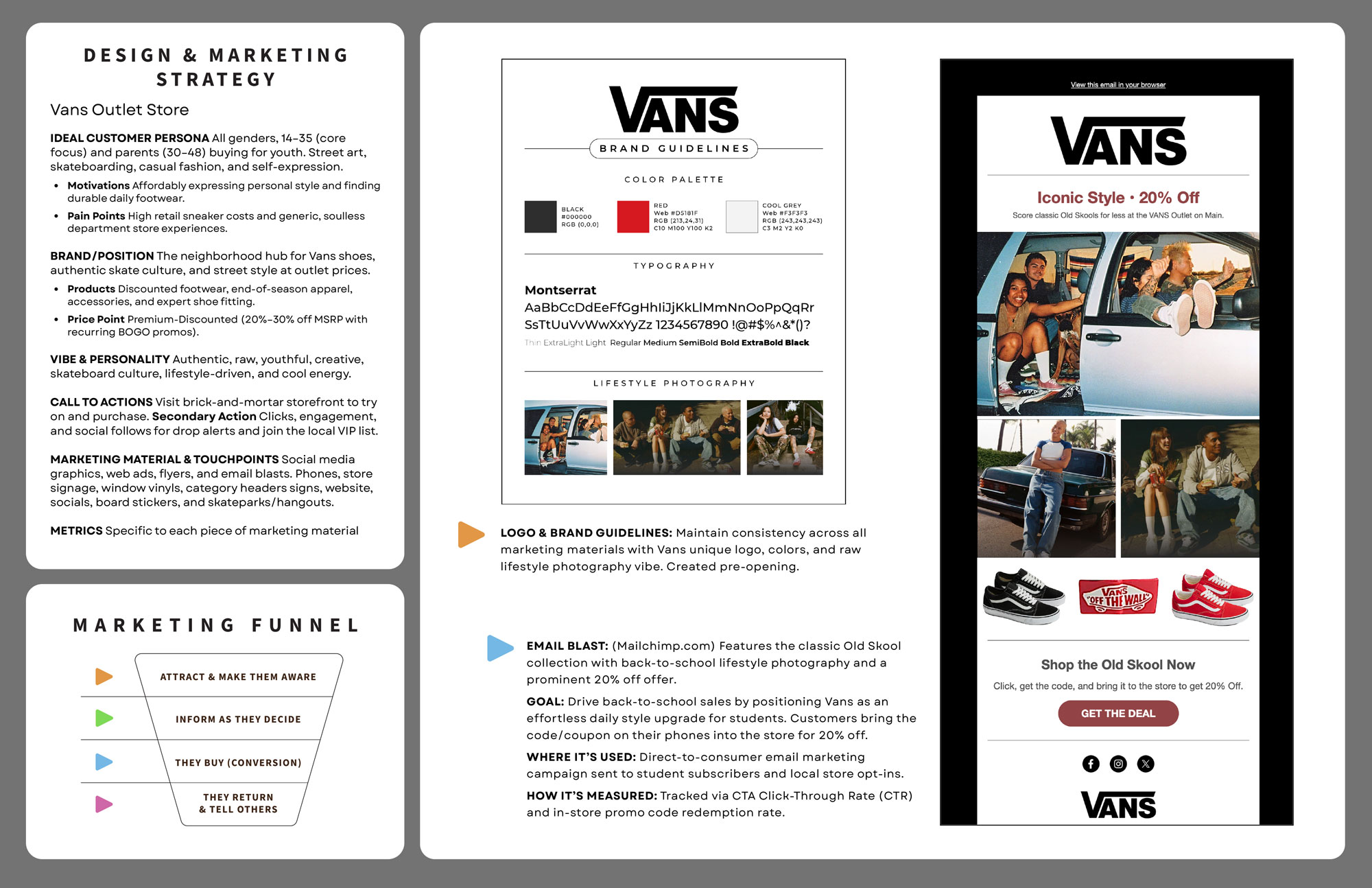
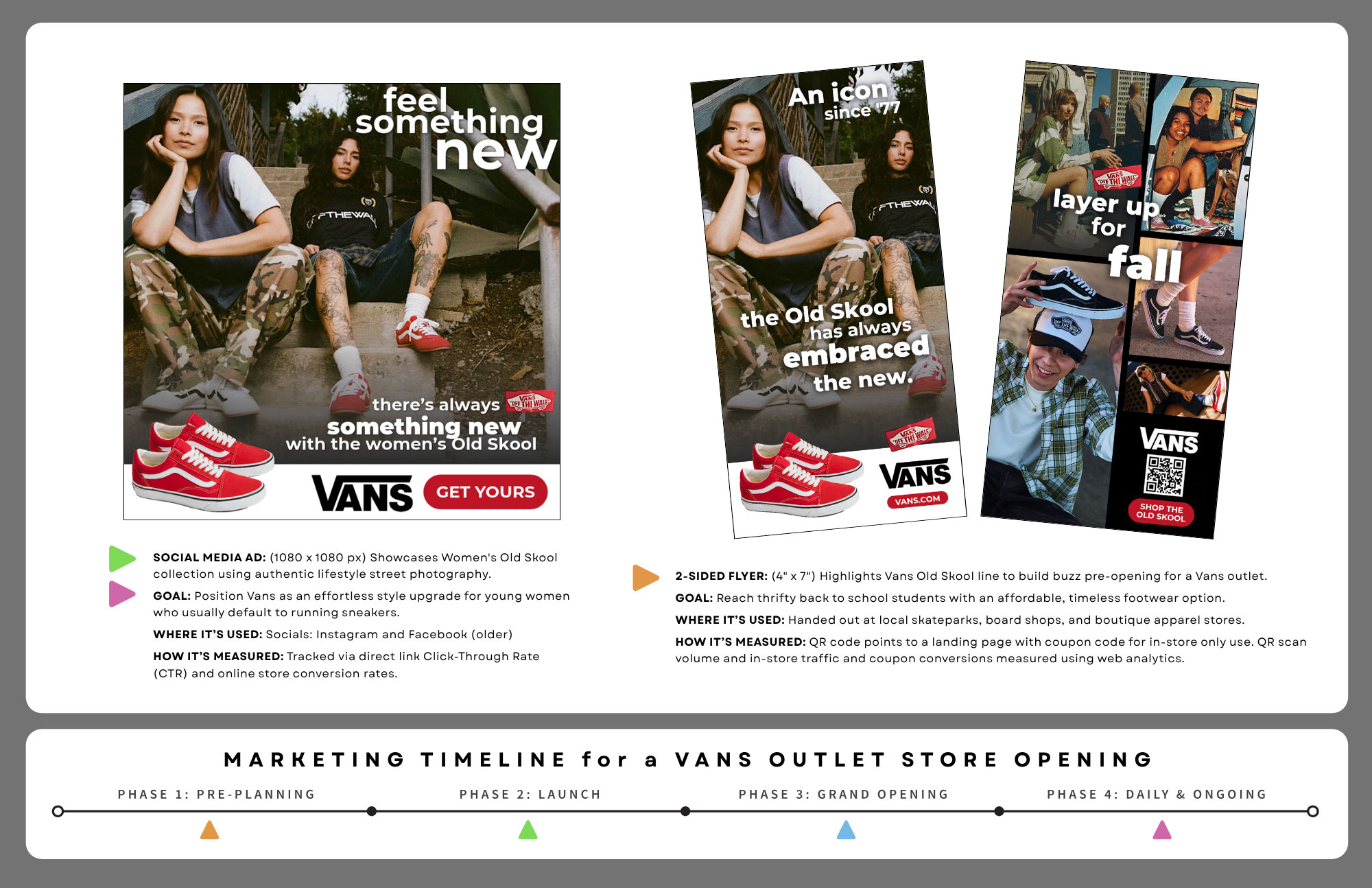
How it is used in the VANS Marketing Campaign Project
- “I do” (Modeling): The instructor demonstrates how to build the pieces in class and provides short “How to use Canva” video walkthroughs.
- “We do” (Scaffolding): Students get downloadable assets, brand guideline templates, and a 2-page portfolio layout template so they don’t have to start from a blank screen.
- “You do” (Independent practice): Once students understand the basics, they choose their own marketing pieces and build a unique campaign on their own.
3. Modeling, Scaffolding & Guided Practice
Show Them How, Then Let Them Try
Show students how to do something, give them support while they practice, and gradually step back as their skills grow.
What it means for teachers
- Students learn hands-on skills by watching someone demonstrate the process.
- Explain not just what you’re doing, but why you’re making certain decisions.
- Give students examples, templates, and guidance when they’re starting out.
- Gradually reduce the support as students become more confident and independent.
Academic Foundation
Cognitive Apprenticeship was developed by cognitive scientists Allan Collins, John Seely Brown, and Ann Holum. Their work draws from traditional apprenticeship models, where beginners learn by observing experienced professionals, practicing with guidance, and gradually taking responsibility for their own work.
The framework emphasizes several instructional methods, including modeling, coaching, scaffolding, articulation, reflection, and gradually reducing support as learners develop expertise.
This approach is particularly relevant to technical education, where students must develop practical skills and learn how experienced professionals make decisions.
The familiar classroom sequence of “I do, we do, you do” provides an accessible way to put these principles into practice.
Read the Research: