
Here’s an example of a Marketing Campaign for a local artisan bakery. AI was leveraged throughout this process to increase creativity, knowledge through research, productivity, and efficiency.
These steps were followed:
- Write the Brand & Marketing Strategy
- Write the Marketing Plan & Timeline
- Create the brand style guide
- Understand how each marketing piece focuses on the needs of the customer
- Understand each marketing piece’s role and position in the marketing timeline and marketing funnel
- Choose which marketing pieces to design
- Gather design assets that reflect your Brand and Marketing Strategy, Marketing Plan & Timeline
- Photos, illustrations, background textures, borders, stylized and repeatable design elements, etc.
- Design several marketing pieces
- Create your final 2-page portfolio spread using the template below
2-Page Portfolio Spread
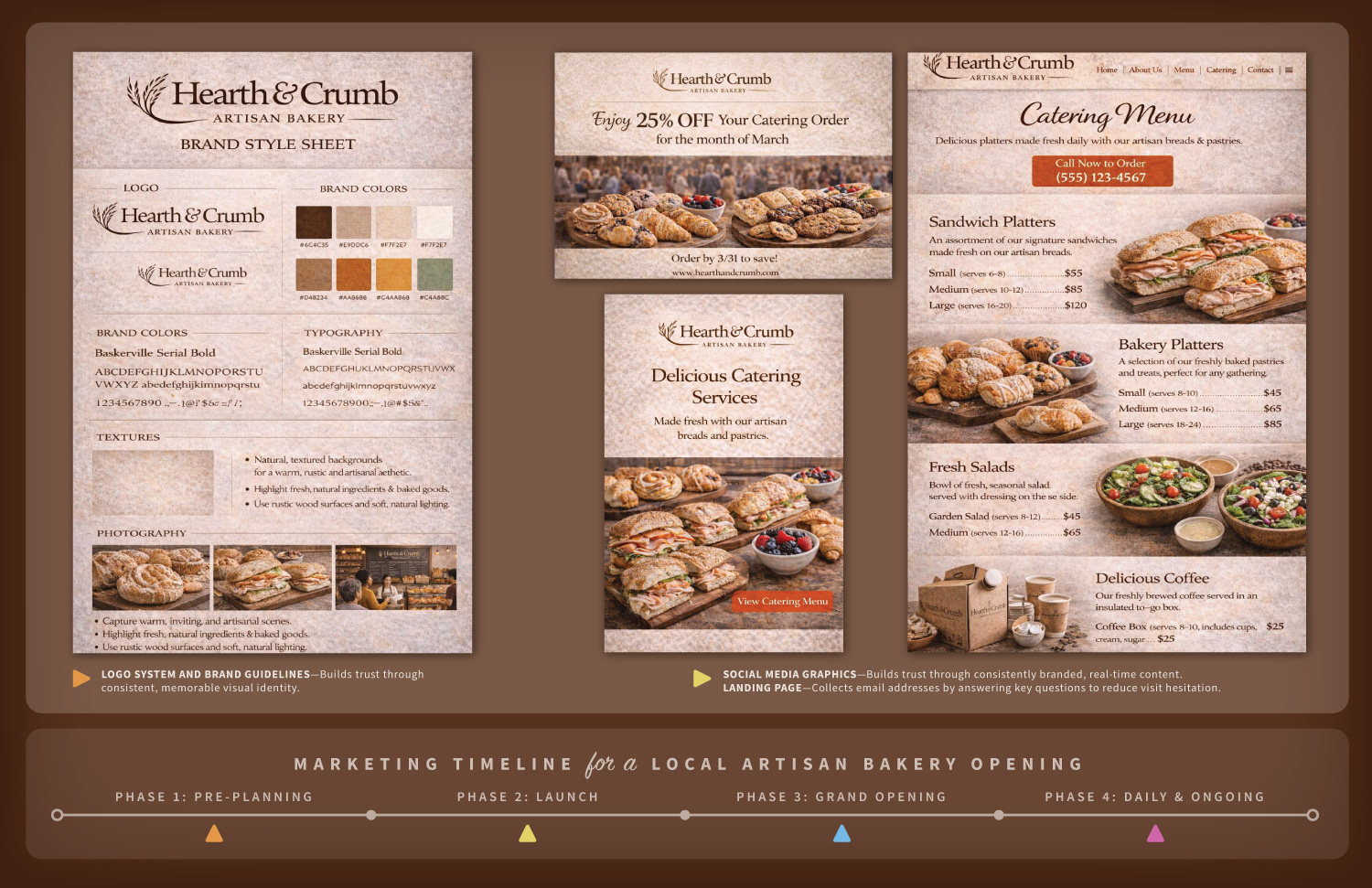
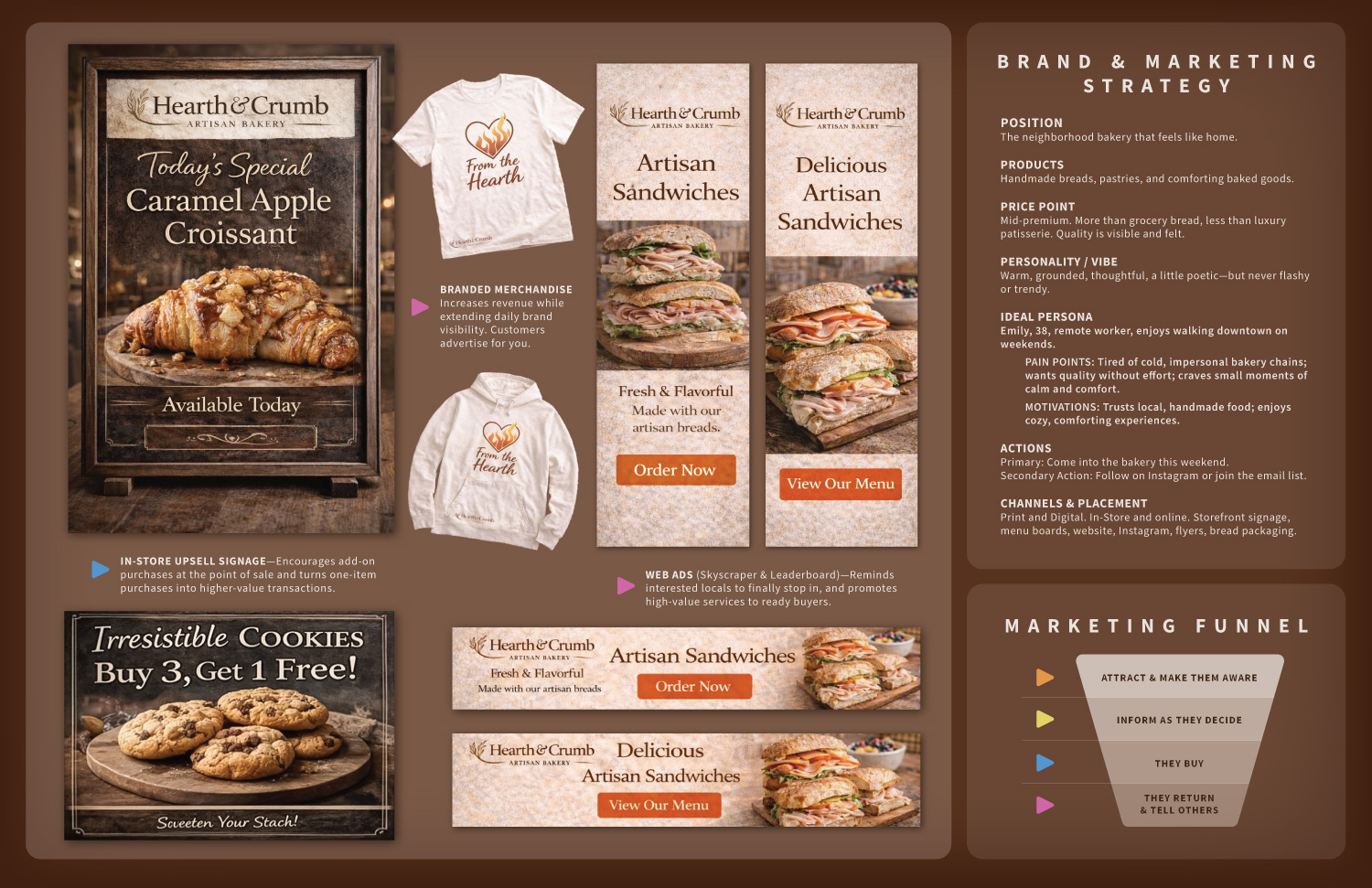
This portfolio spread shows the final marketing campaign and how it should be presented to an employer in an interview. Notice how we highlight your marketing knowledge and your understanding of where the marketing materials fit into the marketing timeline, strategy, and funnel. This tells the potential employer that you also understand the “why” behind your designs.
Page 1
Page 2
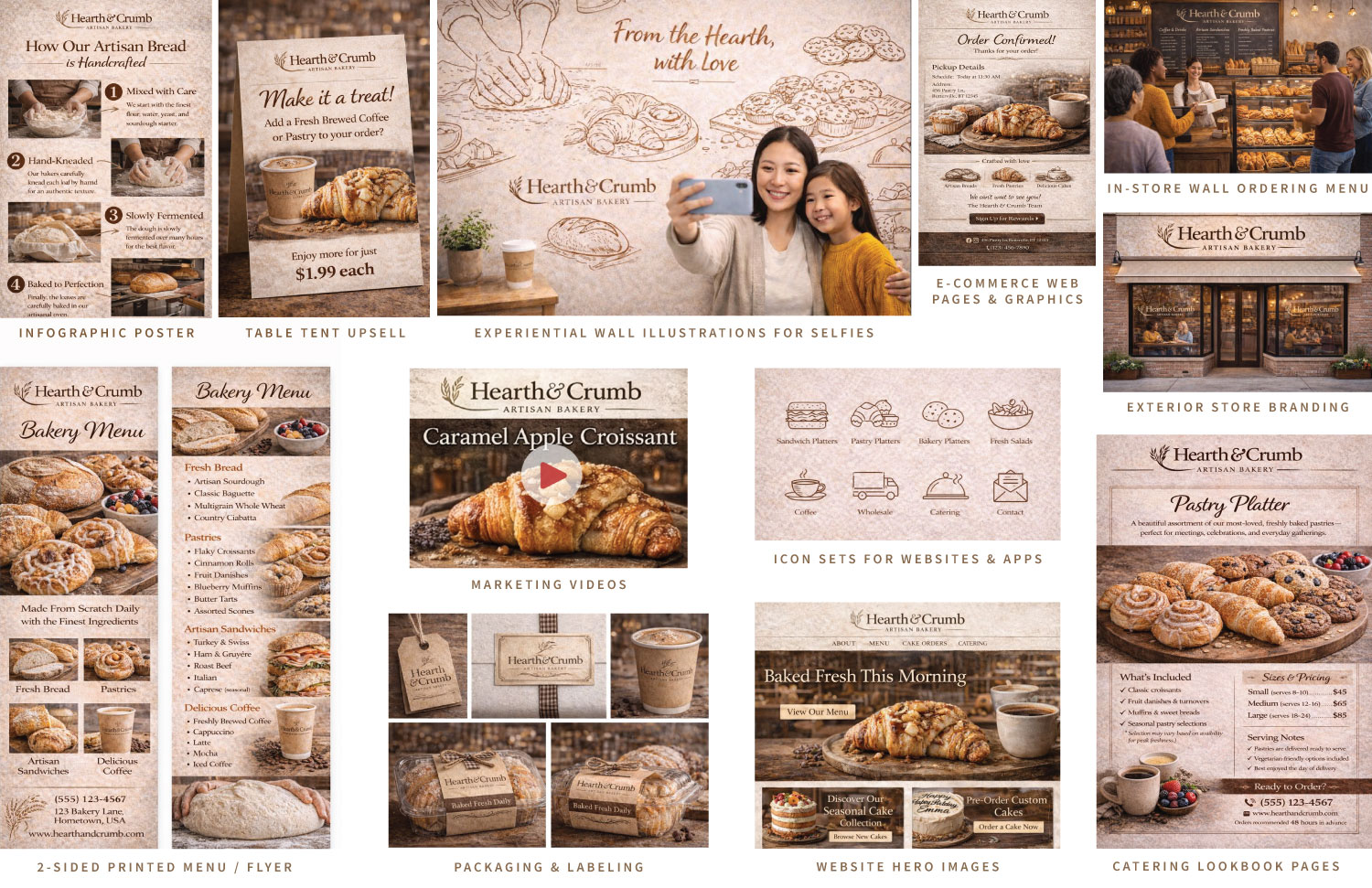
Other marketing materials you could design for your campaign:
The Bakery’s Marketing Plan and Timeline

PHASE 1: Pre-Planning Phase (Before Opening)
Business Context: Hearth & Crumb does not yet exist in the customer’s mind. The focus is on defining the brand, setting expectations, and building early awareness before any products are sold.
Marketing Goal: Define the brand and attract future awareness
Funnel Stage: Top of Funnel — Awareness
Marketing Principles (The “Why”)
- Brand Message / Positioning
This defines what Hearth & Crumb stands for and how it differs from other bakeries in town. Positioning the bakery as artisan, premium, and locally rooted helps attract customers who value quality and experience, not just price. - Ideal Customer Persona
Marketing focuses on professionals, foodies, creatives, and higher-income locals. Designing for a specific audience leads to clearer visuals, stronger messaging, and more effective marketing overall. - Consistency
Consistent visuals build trust before customers ever walk inside. When everything looks cohesive, the bakery feels established and credible—even before opening day.
Designer’s Role: What to Create (With Examples)
- Logo System (primary, secondary, icon)
Used on signage, coffee cups, packaging, and social profiles.
For Hearth & Crumb, the icon logo might appear on a coffee cup sleeve or Instagram profile image for instant recognition. - Brand Style Guide (color, typography, photography)
Defines warm neutrals, refined typography, and natural-light photography.
This ensures menus, social posts, and the website all feel like the same bakery. - Pre-Launch Teaser Graphics (social + window signage)
A social graphic might say, “Something warm is rising downtown.”
Window signage shows the logo and the opening season to build curiosity. - Packaging Mockups (bags, cups, pastry boxes)
A minimal, high-quality pastry box signals a premium product before it’s opened.
Coffee cups act as walking advertisements when customers carry them around town.
Key Designer Takeaway:
Design creates perceived value before the first sale.
PHASE 2: Launch Phase (Soft Opening & First Weeks)
Business Context: The bakery is open, but customers are still deciding whether it’s worth visiting. Marketing focuses on trust, clarity, and proof.
Marketing Goal: Turn curiosity into first-time visits
Funnel Stage: Middle of Funnel — Consideration
Marketing Principles
- Social Proof
Showing real food, real people, and the actual space reassures customers that the bakery is legitimate and active. This reduces hesitation and builds confidence. - Visual Storytelling
Imagery and layout communicate the bakery’s atmosphere without long explanations. Hearth & Crumb should feel warm, handcrafted, and inviting at a glance. - Repetition
Seeing the same visual style across menus, social posts, and signage builds familiarity. Familiar brands feel safer and easier to choose.
Designer’s Role: What to Create (With Examples)
- Social Media Templates (posts, stories, reels)
A post highlights a new croissant flavor using a consistent layout. Story templates show “Today’s Fresh Bakes” without redesigning every post. - Menu Design (print + digital)
The printed menu helps customers order quickly in-store. The digital menu answers questions before customers arrive. - In-Store Signage (hours, sourcing notes, values)
Small signs explain “Baked fresh every morning” while customers wait. This reinforces the artisan story during downtime. - Website Landing Page (simple, mobile-first)
A landing page shows hours, location, and a catering inquiry button. Social posts link directly to this page to guide the next step. - Web Ads (driving first visits)
At this stage, people may recognize Hearth & Crumb but haven’t visited yet. Display ads act as reminders, reinforcing awareness and nudging users toward action. A leaderboard ad on a local news site promotes “Now Open — Hearth & Crumb Artisan Bakery.” A skyscraper ad features a pastry photo and “Visit Us Downtown Today.” Ads link to the landing page with hours, location, and menu preview.
Key Designer Takeaway:
Design reduces uncertainty and helps customers choose confidently.
PHASE 3: Grand Opening Phase (Event Marketing)
Business Context: Hearth & Crumb becomes a community destination, not just a new store.
Marketing Goal: Create urgency, buzz, and community connection.
Funnel Stage: Conversion + Amplified Awareness
Marketing Principles
- Event-Based Marketing
Limited-time events create urgency and give people a reason to visit now instead of later. - Community Alignment
Partnering with local businesses or influencers extends reach quickly and builds goodwill. - Shareability
Visually engaging spaces and graphics encourage customers to post and tag the bakery, amplifying reach organically.
Designer’s Role: What to Create (With Examples)
- Event Identity (mini visual system)
A “Grand Opening Weekend” graphic appears on posters, social ads, and signage. This makes the event feel intentional and professional. - Promotional Graphics to Sell (social ads, posters, email headers, signs)
A social ad promotes “Free pastry with first coffee — Opening Saturday.” Email headers reuse the same visuals for recognition. Upselling-focused, point-of-sale marketing changes “Will they buy?” to “How much will they buy?” - In-Store Experiential Design (photo moments)
A branded wall encourages photos and social sharing. Customers market the bakery simply by being there, taking selfies, and posting about it. - Takeaway Print Pieces (postcards, loyalty cards)
A postcard thanks customers and invites them back next week. Loyalty cards encourage repeat visits. - Web Ads (create urgency)
Display ads are effective for short, time-sensitive messages. During a grand opening, urgency matters more than depth of information. A leaderboard ad announces “Grand Opening This Weekend — Free Pastry with Coffee.” A skyscraper ad runs on local event or lifestyle websites. All ads link to a grand-opening landing page or event details.
Key Designer Takeaway: Good design turns one event into ongoing momentum.
PHASE 4: Daily & Ongoing Marketing (Sustainability Phase)
Business Context: The excitement fades, and long-term success depends on repeat customers and steady engagement.
Marketing Goal: Retain customers and increase lifetime value
Funnel Stage: Bottom of Funnel — Loyalty & Advocacy
Marketing Principles
- Brand Reinforcement
Consistent visuals over time build recognition and trust. Customers know what to expect from the brand. - Habit Formation
Marketing now supports routine visits and repeat behavior. Familiar design makes returning feel comfortable. - Upselling & Cross-Selling
Design subtly encourages higher-value purchases without feeling pushy.
Designer’s Role: What to Create (With Examples)
- Daily Social Content System (reusable layouts)
A template highlights a seasonal latte or sandwich of the week.
This keeps content consistent and efficient. - Seasonal Campaign Visuals (menus, window graphics)
A fall window graphic promotes “Pumpkin Spice Is Back.”
Seasonal updates refresh interest without rebranding. - Catering Sales Materials (one-pagers, PDFs)
A one-page flyer highlights birthday cakes, boxed lunches, and coffee service.
A social graphic links directly to the catering page on the website. - Email Marketing Templates
Monthly emails promote new items or holiday ordering deadlines.
Consistent design builds familiarity and trust. - Web Ads (targeted reminders-optional)
Once the bakery is established, constant display ads are less effective. Instead, they’re used strategically for seasonal or high-value offerings. A display ad promotes “Holiday Catering Orders Now Open.” A skyscraper ad highlights “Custom Birthday Cakes Available.” Ads link directly to the website’s catering page. - Loyalty Program Design
Punch cards or digital loyalty graphics reward repeat visits and discourage switching to competitors. - Gift Cards & Merchandise
Gift cards encourage larger purchases.
Tote bags and mugs extend the brand into daily life.
Key Designer Takeaway:
Design supports long-term business growth, not just launch excitement.