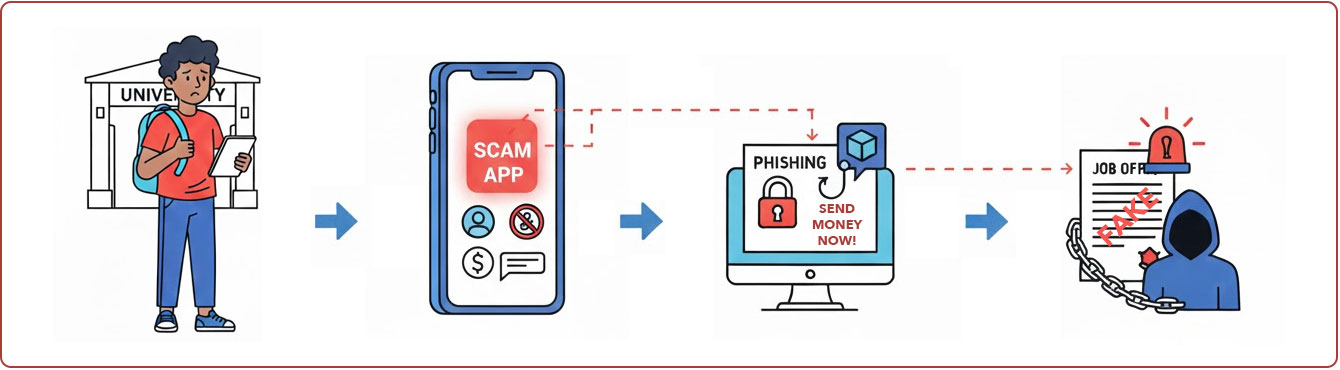
Unfortunately, artists (and the rest of the world) are targets of scams and fraud. Here are a few popular scams to watch out for and protect yourself from. Remember, if it sounds too good to be true, it most often is. It’s okay not to trust something that you feel isn’t right.
How To Avoid a Job Scam
Before you accept a job offer, take these steps to avoid common job scams:
- Search online. Look up the name of the company or the person who’s hiring you, plus the words “scam,” “review,” or “complaint.” See if others say they’ve been scammed by that company or person. No complaints? It doesn’t guarantee that a company is honest, but complaints can tip you off to possible problems.
- Talk to someone you trust. Describe the offer to them. What do they think? This also helps give you vital time to think about the offer.
- Don’t pay for the promise of a job. Honest employers, including the federal government, will never ask you to pay to get a job. Anyone who does is a scammer.
- Never bank on a “cleared” check. No honest potential employer will ever send you a check to deposit and then tell you to send on part of the money, or buy gift cards with it. That’s a fake check scam. The check will bounce, and the bank will want you to repay the amount of the fake check.
Types of Scams to Watch For
Popular scams include overpayment schemes where a fake check is sent for more than the price, leaving the artist to lose money after returning the difference. Other common scams involve fake galleries or contests that charge artists upfront fees for exposure, “buyer” scams that use stolen credit cards or fake payment confirmations, and phishing scams that steal login information. There are also impersonation scams where scammers pretend to be famous artists or hosts of popular podcasts.
Buyer and payment scams
- Overpayment scheme: A buyer sends a fake check or fraudulent payment for more than the purchase price and asks the artist to refund the difference. The original payment later bounces or is reversed.
- Fake payment confirmations: Scammers send fake emails or messages appearing to be from a payment processor like PayPal. Once the artist ships the work, the money never arrives.
- Payment with stolen funds: Payments may come from stolen credit cards or hacked accounts. Once the real owner disputes the transaction, the money is reversed, leaving the artist without the payment or the artwork.
- Gift card requests: Scammers may urgently ask for payment via gift cards for an item they claim to have purchased or for a service they are offering.
Representation and exposure scams
- Vanity galleries: These organizations charge artists a fee to exhibit their work but provide little to no actual sales or exposure.
- Fake ad opportunities: Scammers promise a high fee for posting sponsored content on an artist’s site, but the offer is too good to be true and the ads are fake.
- Fake contests: Artists are asked to pay an entry fee for a contest that is a scam. The goal is to collect as many entry fees as possible.
Digital and impersonation scams
- Phishing scams: An email or message from a supposed client contains a link to a fake website designed to steal login credentials for social media, payment accounts, or other personal information.
- Impersonation scams: Scammers pretend to be other artists, journalists, or podcasters to gain trust, get information, or charge fees for fake opportunities.
- NFT scams: Scammers claim they want to buy an artist’s work as an NFT and direct them to a fake platform to pay a “tokenization fee” or create an account, leading to the theft of funds or cryptocurrency.
Social media and “muse” scams
Unsolicited messages: Scammers may contact artists on social media with flattery and requests for information, sometimes asking the artist to be a “muse” for a project. They may send a fake check and ask for the difference to be sent back, or ask for login details.
Fake check and equipment scam
This scenario is a well-known fake check and equipment scam. The “job offer” is fraudulent, and the scammer’s goal is to steal the artist’s money and personal information.
How the Scam Works
- Initial Contact: The scammer reaches out via platforms like Behance, promising a great opportunity to lower the victim’s guard.
- The Hook (Fake Job/Contract): A “job offer” is quickly extended, often without a proper video/phone interview, using convincing but fake contracts and documents to appear legitimate.
- The Equipment Ploy: The scammer insists the artist cannot use their own equipment and must purchase specific computers from a “company vendor”. A legitimate employer would provide the necessary equipment directly or deduct the costs from future paychecks, not ask for upfront payment.
- The Fake Check: The scammer sends a check (which is counterfeit or stolen) to cover the equipment costs and sometimes a salary advance.
- The Trap (Money Transfer): The victim is instructed to deposit the check and then send a portion of the money to the “vendor” (who is actually the scammer or an accomplice) via a wire transfer, payment app (Zelle, PayPal, etc.), or by purchasing gift cards.
- The Loss: The victim’s bank initially makes the funds available, but it can take weeks for the check to be identified as fake. Once it bounces, the bank removes the full amount from the victim’s account. The artist is then responsible for paying the bank back the entire sum and has also lost any money sent to the “vendor”.
Red Flags
- Unsolicited Contact: The artist was contacted out of the blue for a high-paying job they didn’t apply for.
- No Proper Interview: Communication is likely via text or email/chat only, avoiding voice or video calls.
- “Check” Payment for Equipment: Legitimate companies do not send a check and ask the new hire to send money to a third-party vendor for equipment.
- Pressure to Act Quickly: The scammer may create a sense of urgency to prevent the victim from properly researching the offer.
- Generic or Poor Communication: The messages may contain grammatical errors or unusual language (e.g., use of the word “kindly”).
This is a classic and dangerous scam. The artist should cease all communication, report the user to Behance, and not deposit any checks or provide sensitive information.
More Information
Find more information on spotting and reporting job scams on the Federal Trade Commission website.
Content created by Craig Kunce, the US Gov/FTC, and Google’s Gemini.