Quick links to design principles on this page:
- Message
- Audience
- Design Style
- Layout (Principles & Elements)
- Chunking
Six Simple Design Basics to Always Follow
Message
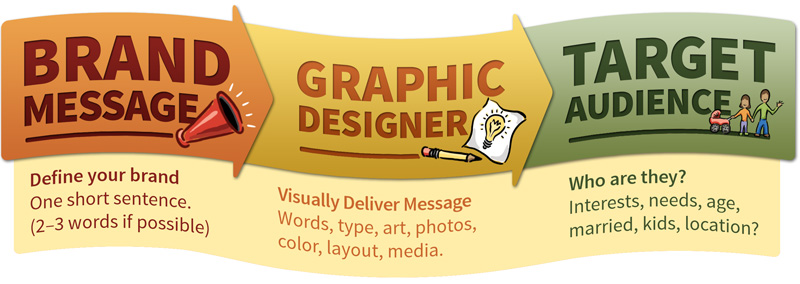
Brand Message
The brand message is consistent and usually never changes.
The brand message is simply: what people think about when they think of your company.
Subway’s brand message is “Eat Fresh.” What do you think about when you think of Subway? Fresh sub sandwiches? Eat Fresh? Kids meals? All are correct answers, depending on your opinions of Subway. But the main message Subway wants to communicate is “Eat Fresh.”
The others, kids club, new bread flavors, breakfast, seasonal sandwiches, etc., are all marketing campaigns that will change. Eat Fresh is the primary brand message—it must not change. If it does, Subway will begin to lose its brand recognition among customers, and then its brand loyalty. That’s usually the end of a business. If a business’s brand isn’t serving its customers most of the time, it will rebrand itself entirely. Charter Communications is a good example. Customers associated them with poor customer service and an out-of-date company as we changed from cable TV to internet streaming. So, they re-branded as Spectrum—leaving behind their damaged Charter brand.
Marketing Campaigns
The consistent brand directs each different marketing campaign.
Marketing campaigns can change and often do in order to target specific target markets. The marketing campaign can be, and often is, the company’s brand.
Again, Subway uses several different marketing campaigns to reach different target markets—Jared’s weight loss, kids club, new bread flavors, new sandwich choices, new menu items, breakfast, seasonal sandwiches, etc.
What types of messages do companies and organizations communicate?
Most businesses and organizations communicate or “sell” one of four things:
- Products
These are tangible products we can touch and feel, such as food, toys, tools, radios, computers, cars, cosmetics, books, and furniture. - Services.
These are usually intangible things that we purchase, like health care, financial advice, website hosting, cable television, phone service, an auto mechanic’s knowledge, education, home cleaning services, a caterer serving food at your wedding, etc. - Ideas
Or sometimes ideals. These are usually intangible things like ideas promised by a politician, or a new concept taught by a teacher, or a new theory marketed by a researcher to prove themselves worthy of government or private funding. - A combination of product, service, and idea
This includes many of the items listed in 1, 2, and 3. When you hire a wedding photographer, you buy their service (their knowledge, training, and expertise as a photographer) and their product (usually printed wedding photos). A college professor may have a new idea they want to sell, but they can only tell a limited number of students face-to-face. So they put their ideas on the Web in an eBook or a printed book and sell it as a product.
Strong brands “own” a short message in our hearts and minds
What do you want people to think about when they see your client’s new logo, icon, direct mail piece, packaging, website, or advertisement? When customers think of strong brands, they usually think of short phrases or single words.
The stronger and clearer the brand, the more focused the message (brand) is in the minds of consumers. Your brand words should be a benefit that your customers will want.
Here are strong brands and the words people associate with them:
- YouTube – Video Streaming
- HGTV – DIY and home-improvement TV
- Food Network – Cooking shows
- Instagram – Photo-sharing social network
- Tesla – Luxury electric cars
- Patreon – YouTube, but you actually get paid
- Etsy – Handmade goods for sale
- eBay – Online auction site
- Barnes & Noble – Bookseller
- Patagonia – Outdoor outfitter
- FedEx – overnight shipping
- Taco Bell – Mexican fast food
- Nike – high-performance athletic shoes
- Subway – eat fresh, and freshly made sub sandwiches
- Tide – clean clothes
- X-games – extreme sports games
- Krispy Kreme donuts – tasty glazed donuts
- Starbucks – gourmet, high-end coffee
- Coke – cola (especially in the South)
- Mercedes – a luxury car
- Porsche – luxury sports car
- Red Bull – energy drink
- Timex – value-priced, durable watches
- Hershey’s – chocolate candy bar
Audience
“Audience” is my simple yet effective way to say, “Please define your primary demographic target audience.” That sounds a bit “stuffy” to my students, and to me—so audience seems to work well.
Who does your client want to reach with their brand and/or campaign message? You must know who you are “speaking” to before you can design something for them.
Mountain Dew targets young people who lead fast, active lifestyles. The design of Mountain Dew’s logo, packaging, advertising, and commercials “speaks” to their young, active target market. Everything designers and marketers do is based on speaking to these Mountain Dew drinkers and connecting them with their lively, green beverage.
You should learn as much as possible about your target market and begin to understand their lifestyles. How do you do this? The best way is to engage with them and ask them frequently.
Things to consider when defining your audience
- How does your audience feel about your product, service, or idea? What beliefs do they hold regarding it?
- How does your audience use your product, service, or idea?
- How often do they use your product, service, or idea?
- Where do they live? (state, country, weather, landscape, etc.)
- Female? Male? Other?
- Married? Single? Divorced? Kids?
- Pets? (dogs, cats, fish, horses, reptiles, hamsters, ferrets, hobby farm, etc.)
- Education?
- Age?
- Strongly held beliefs? (religious, political, human rights, freedom, environment, etc.)
- Passionate about? (environment, education, feed the hungry, gun ownership, causes, advocacies, etc.)
- Hobbies & Interests? (hunting, HAM radio, sewing, ceramics, boating, running, skiing, family time, etc.)
- What generation is the majority of your target market?
- Gen Alpha
- Gen Z
- Millennials
- Gen X
- Baby Boomers
- Silent Generation (Traditionalists, Veterans)
- Where does your audience get most of their information? (Internet, cable news, print, network news / phone, tablet, computer, radio, TV, word-of-mouth)
Design Style
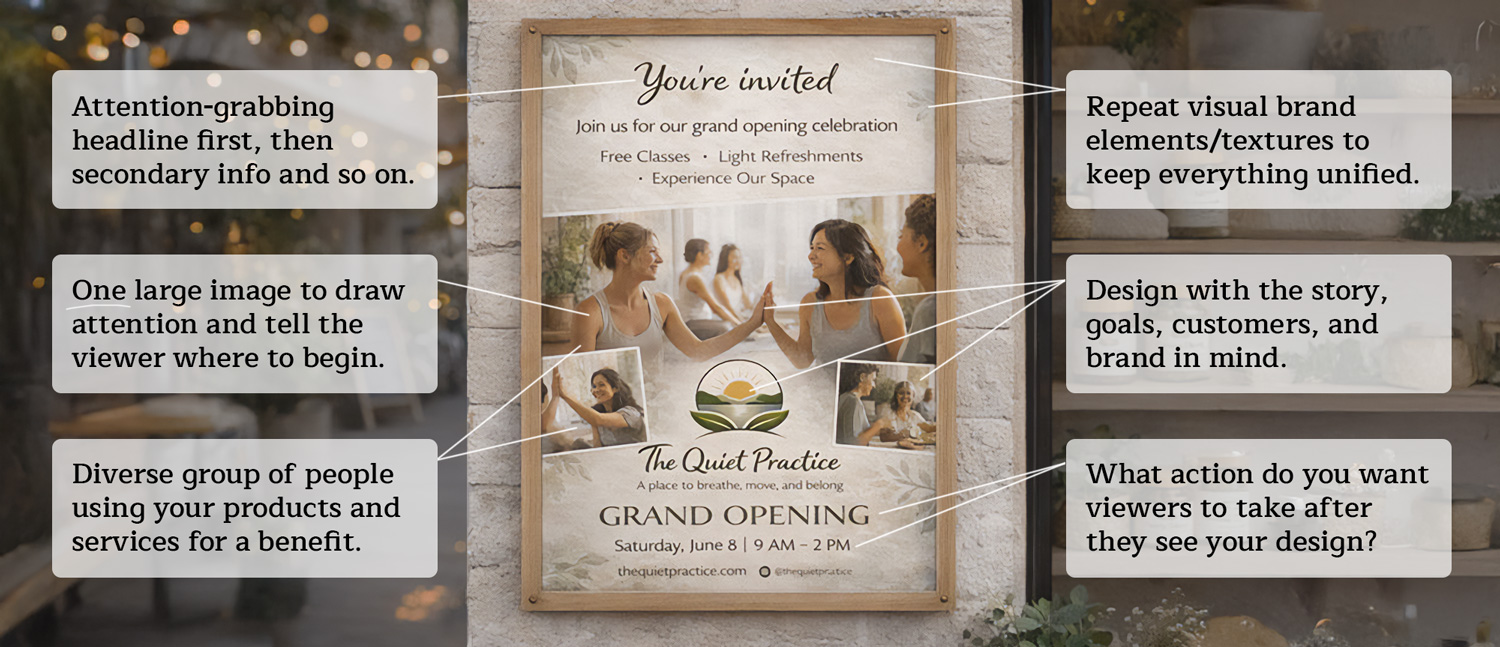
Design style is pretty simple. Your design style (type, art, photos, video, colors, design elements, and layout) must help deliver your message to your audience. All your design decisions will be directed by the message and audience.
Here are a few examples:
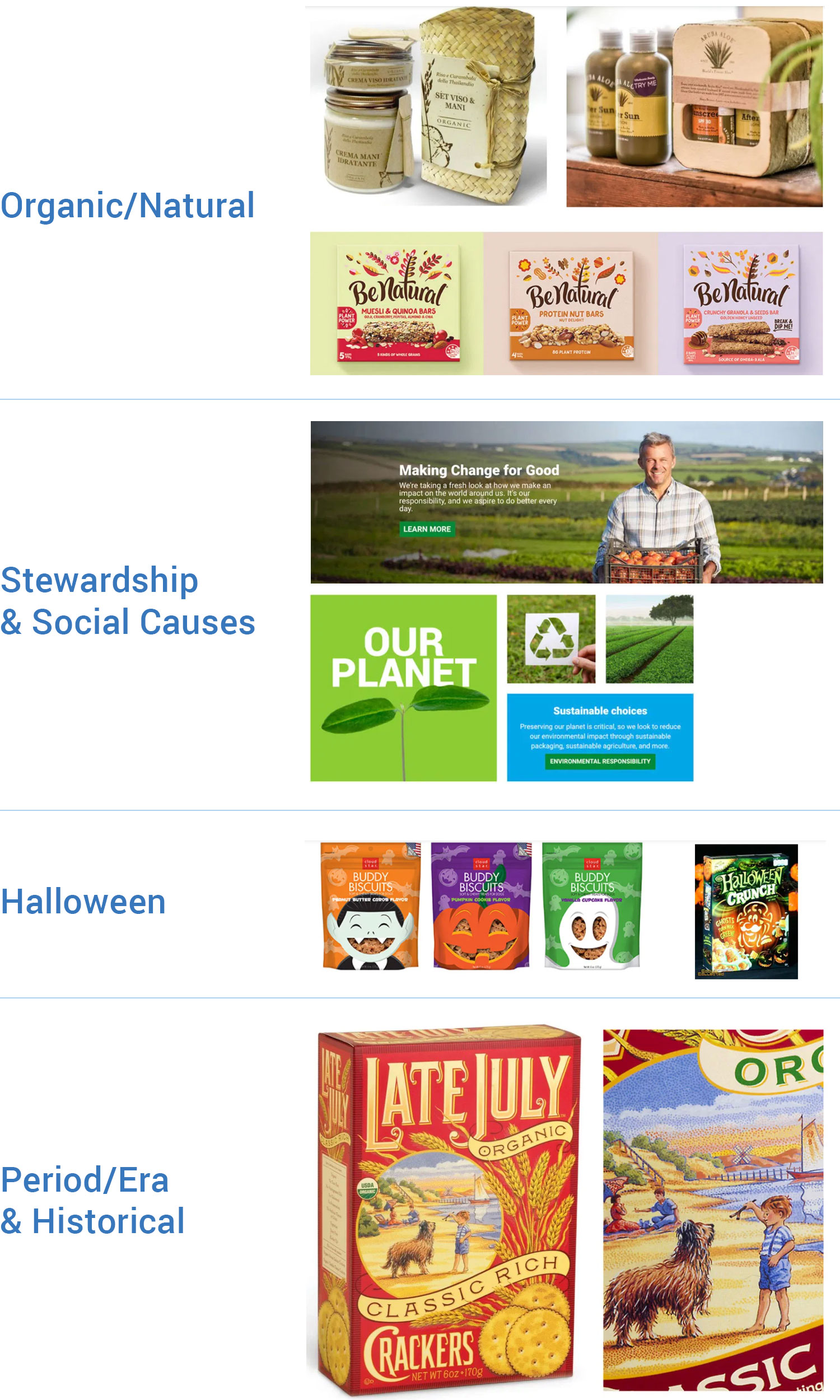
Your client’s brand and/or marketing campaign directs the design style. What will your message look like? Everything you design fits the brand and marketing campaign—the typefaces, art, photography, colors, patterns, layouts, borders, etc. The design style focuses on appropriateness. Meaning, is the design style appropriate to deliver the brand or marketing campaign’s message to the target market?
Examples: If you really like drawing anime, and your client sells anime comic books, your design style will be a good fit. However, some designers can’t break away from their own passions and will design a website for a drive-in hamburger restaurant using their beloved anime style—a horrible idea and a poor fit for their client.
We must be flexible as designers and think of our clients’ needs. All seasoned graphic designers have the ability to design in many different styles, and they have an inventory of skills to serve their client’s needs—not just their own artistic needs.
Remember that a graphic designer works for someone else (the client). It is important to design for their needs. message and target market (customers).
Layout
A great video introducing layout (5:14)
The Gestalt
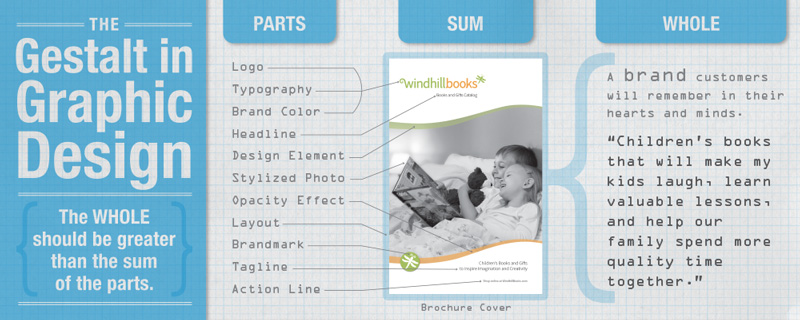
Gestalt is a psychological concept meaning “shape” or “form,” and it refers to the idea that the “whole” is perceived as more than the sum of its parts. In graphic design, this means that a logo, brochure, website, or catalog is perceived as being more than just a collection of type, art, paper, layout, etc.; it is a branded visual message that carries with it (if done well) an emotional message that connects on a personal level with the intended audience. We don’t just want our viewers to read the text and look at photos; we want them to feel our message in their hearts, we want to educate their minds about our product or service, and we want them to remember it as something they want or need.
So, this holds true under examination. The logo or catalog is more than its parts—all the parts come together to create a powerful, memorable brand identity that evokes emotion in the viewer.
This of the way you feel when you get your favorite catalog in the mail. I remember this feeling as a child when the Sears Wish Book (the Christmas catalog) would arrive each year. It was more than just a collection of toys for sale—it was the warm, childhood-driven, materialistic side of Christmas wrapped up in one big picture book. Oh, the possibilities it promised : )
Chunking
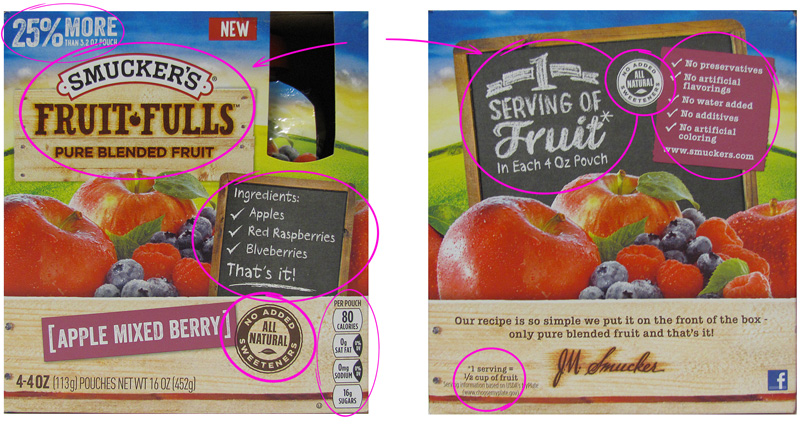
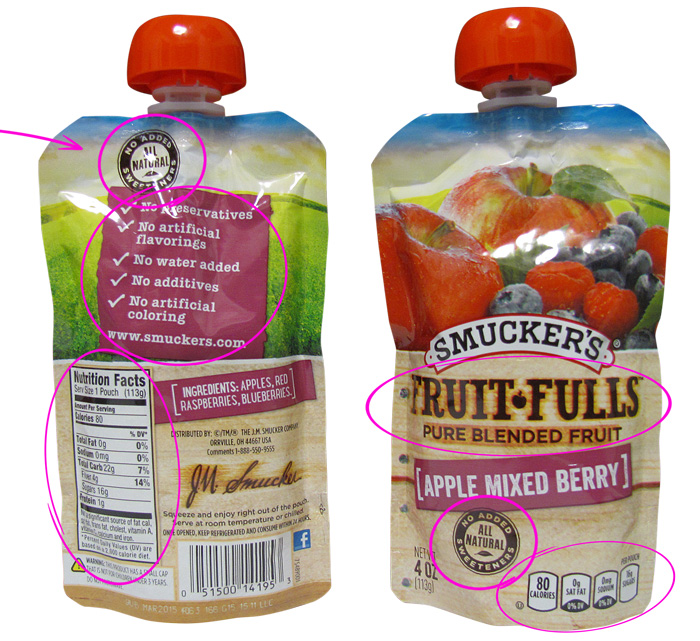
“Chunking” is what I prefer to call the design concept of grouping similar elements so they are perceived together and appear to belong together.
The academic term is “Unity through proximity.” My students — and most people — tend to get confused by this academic terminology, so I use chunking, and they seem to understand it better.
We know humans like to make order out of chaos. As a designer and visual communicator, you can help deliver information quickly and efficiently to your viewers by chunking your information into small bits. This allows the viewer to read little pieces of information at a time. Too much information can be an overload—a bad thing.
Viewers usually like to read small bits of information that go together. Chunking allows designers to control which bits of information your viewer sees first, second, third, and so on.
When chunking information, try to create “logos” with your information. These “logos” can use similar:
- Typefaces
- Design styles
- Colors
- Borders & frames
- Illustrative styles
- Backgrounds
- Drop shadows
- Gradients
- Textures
These help to unify the elements of each chunk and make them go together.
Examples of Chunking
Here are several examples that demonstrate good information chunking